Choosing where to pursue an MBBS degree is one of the biggest decisions for aspiring doctors. Every year, thousands of Indian students dream of studying medicine, but limited government seats and the high cost of private medical colleges make the journey challenging. As a result, many students explore international destinations, with Tajikistan emerging as an increasingly popular option.
So, which is better—MBBS in Tajikistan or MBBS in India?
The answer depends on your NEET score, budget, career goals, and personal preferences. This guide compares both options across key factors to help you make an informed decision.
MBBS in India
India offers medical education through government and private medical colleges regulated by the National Medical Commission (NMC). Government colleges are highly affordable but extremely competitive, while private colleges offer more seats at significantly higher tuition fees.
Advantages of Studying MBBS in India
- NMC-regulated curriculum
- Extensive patient exposure due to India’s large population
- No need to adapt to a new country or culture
- Easier communication with patients
- Strong preparation for postgraduate entrance exams in India
Challenges
- Limited government MBBS seats
- High NEET cutoff scores
- Private college fees can range from ₹50 lakh to over ₹1.5 crore
- Intense competition during admission
MBBS in Tajikistan
Tajikistan has become a preferred destination for Indian students seeking affordable international medical education. Many universities offer English-medium MBBS programs, modern infrastructure, experienced faculty, and a curriculum aligned with NMC requirements.
Indian students benefit from affordable tuition, comfortable hostel facilities, and growing academic support systems.
Advantages of Studying MBBS in Tajikistan
- Affordable tuition fees
- English-medium instruction in many universities
- Simple admission process
- Globally recognized medical degrees
- International learning environment
- Lower living expenses compared to many other countries
MBBS in Tajikistan vs MBBS in India: Comparison Table
| Feature | MBBS in India | MBBS in Tajikistan |
|---|---|---|
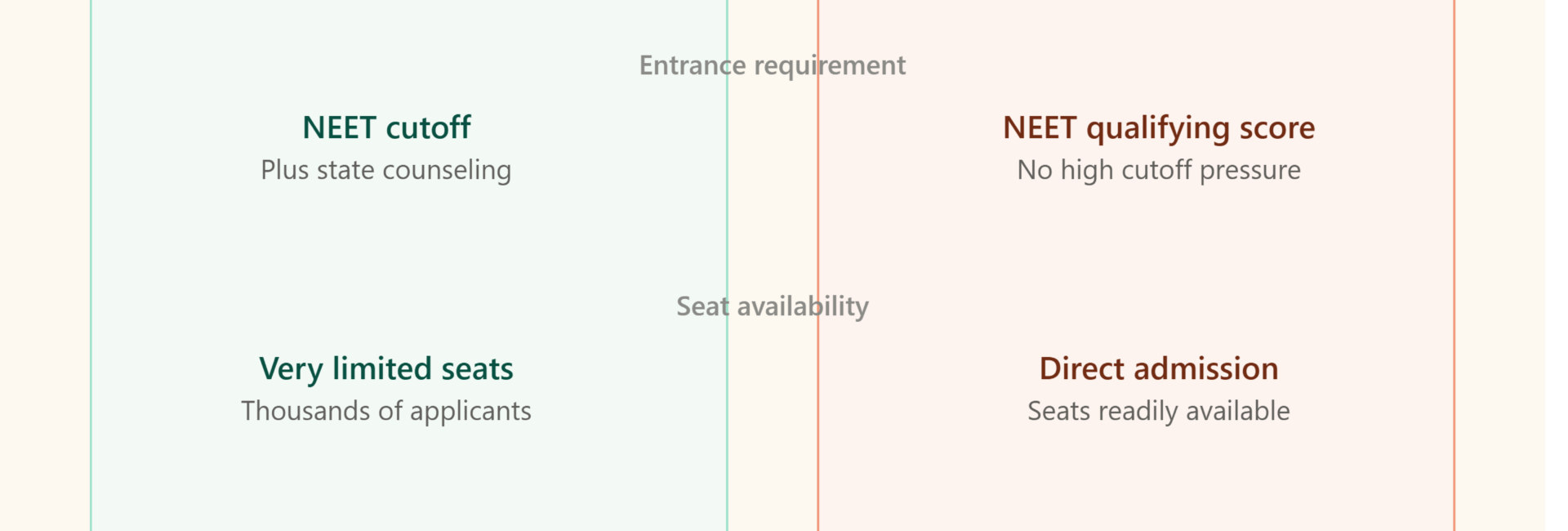
| Admission | Highly competitive | Comparatively easier |
| NEET Requirement | Mandatory | Mandatory for Indian students seeking eligibility to practice in India |
| Tuition Fees | ₹50 lakh–₹1.5+ crore (private) | Significantly more affordable than most Indian private colleges |
| Medium of Instruction | English | English (at many universities) |
| Duration | 5.5 years | Typically 5–6 years depending on the university |
| Living Expenses | Moderate | Generally affordable |
| Global Exposure | Limited | High |
| International Student Community | Limited | Diverse student population |
| Clinical Training | Excellent | Available through affiliated hospitals; varies by university |
| Degree Recognition | NMC | Recognition depends on the university meeting applicable NMC requirements |
Admission Process
MBBS in India
- Qualify NEET
- Participate in national or state counseling
- Seat allotment
- Document verification
- Fee payment
- Admission confirmation
MBBS in Tajikistan
- Qualify NEET (for Indian students planning to practice in India)
- Choose a recognized university
- Submit academic documents
- Receive admission letter
- Apply for a student visa
- Travel to Tajikistan and begin classes
Fee Comparison
MBBS in India
Government Colleges
Government colleges are the most affordable option, but competition is extremely high due to limited seats.
Private Colleges
Private medical colleges may cost anywhere from ₹50 lakh to over ₹1.5 crore, depending on the institution.
MBBS in Tajikistan
Most universities offer tuition and living expenses that are substantially lower than those of private medical colleges in India, making Tajikistan an attractive option for students seeking quality education at a more affordable cost.
Education Quality
Medical universities in Tajikistan have modern classrooms, laboratories, simulation facilities, and teaching hospitals. Many institutions follow internationally accepted medical curricula and provide clinical training as students progress through the program.
When choosing a university, students should verify:
- Recognition by the relevant authorities
- English-medium availability
- Hospital affiliations
- Clinical exposure
- Student support services
Clinical Exposure
India offers one of the world’s largest patient volumes, giving students extensive clinical experience.
In Tajikistan, clinical exposure depends on the university and its affiliated hospitals. Students should choose institutions with strong hospital partnerships and structured practical training.
Career Opportunities
Graduates from both India and eligible overseas universities can pursue careers such as:
- Medical Practitioner
- Postgraduate Medical Education
- Hospital Administration
- Medical Research
- Public Health
- Healthcare Management
- International Medical Careers (subject to each country’s licensing requirements)
Students graduating from abroad must satisfy the licensing and regulatory requirements of the country where they wish to practice.
Who Should Choose MBBS in India?
MBBS in India is an excellent choice if you:
- Secure a government medical seat.
- Prefer studying close to home.
- Want immediate exposure to the Indian healthcare system.
- Are comfortable with intense admission competition.
Who Should Choose MBBS in Tajikistan?
MBBS in Tajikistan may be a good option if you:
- Do not secure a government seat in India.
- Find private medical college fees unaffordable.
- Want an English-medium international education.
- Are willing to study abroad and adapt to a new culture.
- Select a university that meets applicable NMC requirements.
How to Choose the Right Medical University
Before taking admission, evaluate:
- University recognition and accreditation
- Curriculum and teaching quality
- Clinical training opportunities
- Tuition and living costs
- Hostel and student facilities
- Safety and student support
- Success of graduates in licensing examinations
Making an informed choice is more important than simply choosing the lowest-cost option.
Why Choose Doc2Doc?
At Doc2Doc, we guide aspiring medical students through every stage of their MBBS journey. From career counseling and university selection to admission, documentation, visa processing, travel assistance, and post-arrival support, our experienced team helps students make confident and informed decisions.
We focus on transparency, personalized guidance, and helping students select universities that align with their academic goals and long-term career plans.
Frequently Asked Questions
Is MBBS in Tajikistan valid in India?
Graduates from overseas medical universities must comply with the applicable National Medical Commission (NMC) regulations and any required licensing examinations to practice medicine in India.
Is NEET compulsory for MBBS in Tajikistan?
Indian students who intend to obtain eligibility to practice medicine in India are generally required to qualify NEET as per applicable regulations.
Which is cheaper: MBBS in India or Tajikistan?
Government medical colleges in India are the least expensive option. However, compared with most private medical colleges in India, MBBS in Tajikistan is generally much more affordable.
Can I pursue postgraduate studies after MBBS in Tajikistan?
Yes. Graduates can pursue postgraduate education, subject to meeting the eligibility and licensing requirements of the country and institution where they apply.
Conclusion
Both MBBS in India and MBBS in Tajikistan offer valuable opportunities to build a successful medical career.
If you secure a government medical seat in India, it is often an excellent option because of its affordability and extensive clinical exposure. However, for students who do not obtain a government seat and cannot afford private college fees, MBBS in Tajikistan provides an affordable international alternative when choosing a recognized university and planning carefully for future licensing requirements.
